Cortisol isn't the enemy. It's a normal hormone your body needs. The problem shows up when it stays elevated for too long because of ongoing stress that never really gets a chance to resolve. If you want the full breakdown of what cortisol actually does, we covered that in depth in Why Everyone's Talking About Cortisol. Here, let's focus on the food side specifically.
None of these foods are a cure for chronic stress on their own. But they support the systems your body relies on to regulate its stress response, and that's a real, meaningful piece of the picture.
1. Fatty fish
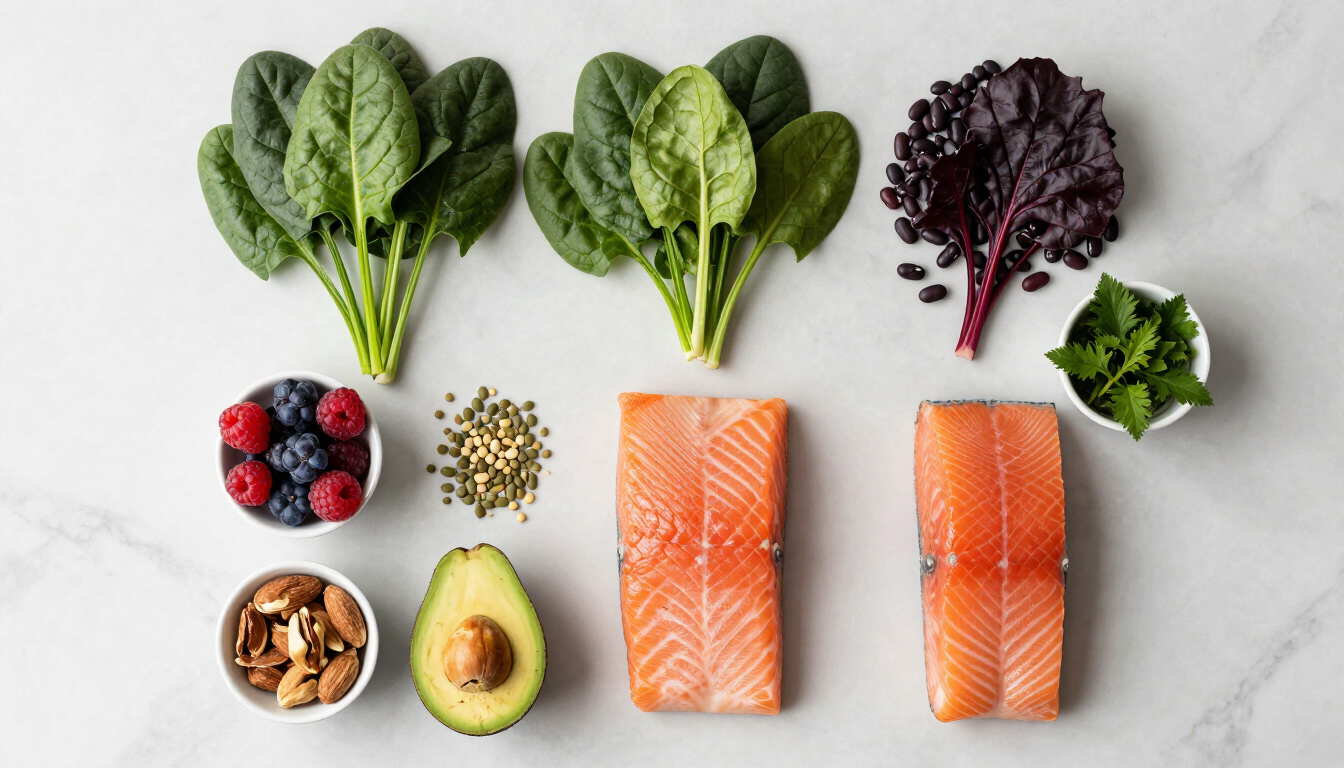
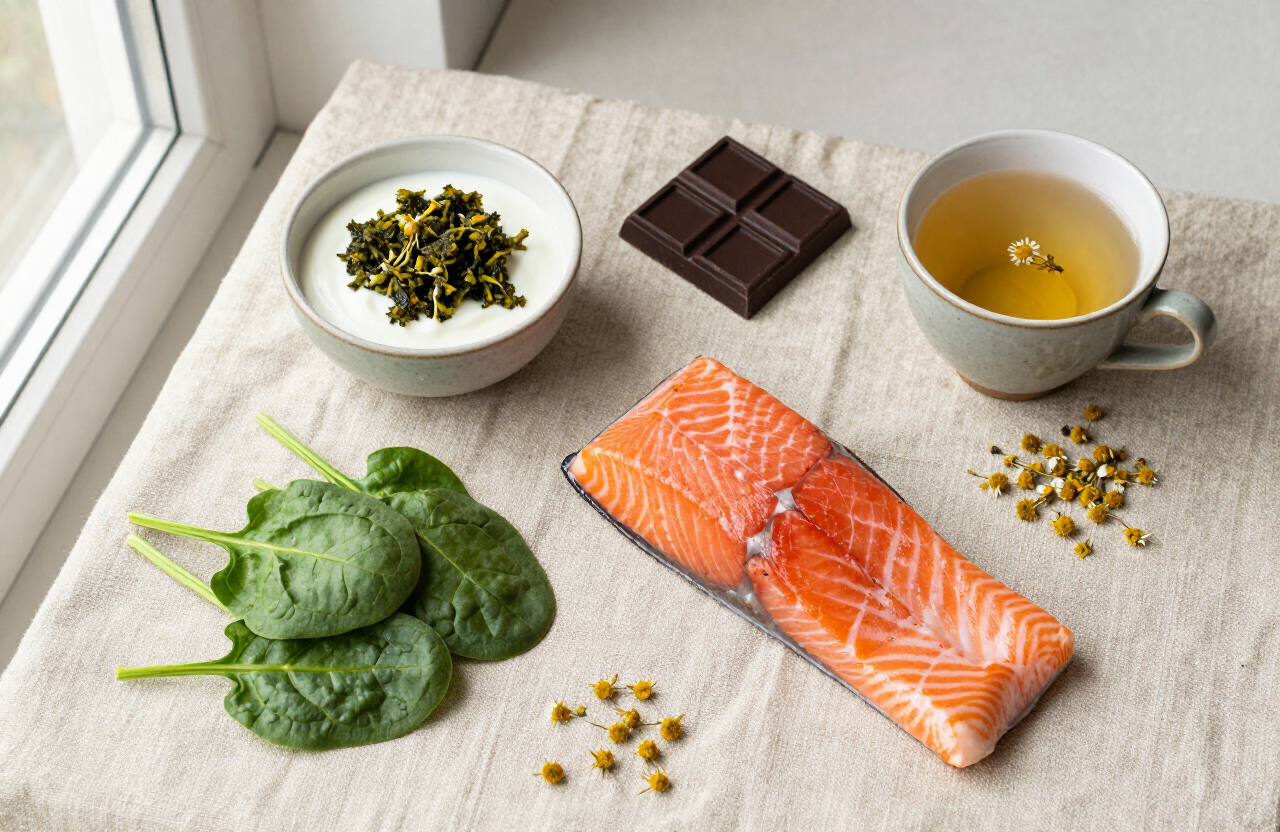
Salmon, mackerel, and sardines are rich in omega-3 fatty acids, which have been linked to lower inflammation and a more regulated stress response. Aiming for fatty fish two to three times a week is a reasonable, realistic target.
2. Dark chocolate
Dark chocolate, particularly varieties with a higher cocoa percentage, contains flavonoids that have shown some promise in modestly supporting a calmer stress response. A small square after dinner is plenty. This is about the compound, not the sugar that often comes with it.
3. Fermented foods
Yogurt, kefir, and sauerkraut support a healthier gut environment, and your gut and your nervous system communicate more closely than most people realize. A more balanced gut is genuinely linked to a steadier stress response over time.
4. Magnesium-rich leafy greens
Spinach and other leafy greens are a solid source of magnesium, a mineral your body burns through faster during periods of stress. We go deeper on magnesium specifically, including food sources and supplement considerations, in Why Magnesium Is Suddenly Everywhere.
5. Chamomile and herbal tea
Chamomile has traditionally been associated with a calming effect, and the ritual of a warm, caffeine-free drink in the evening can itself become a small, effective wind-down cue for your nervous system, separate from whatever's actually in the cup.
Food is one piece, not the whole picture
These foods work best alongside the basics that actually move the needle most: consistent sleep, regular movement, and giving your body a real chance to finish processing stress instead of just pushing through it. For more on that side of things, our sleep habits guide is a good next stop.
Frequently Asked Questions
Can I eat my way out of chronic stress? Food plays a real supporting role, but it works best alongside sleep, movement, and addressing the underlying stressors in your life.
How much fatty fish do I need to eat to see a difference? Research often points to two to three servings per week as a meaningful amount, though even one serving is better than none.
Are herbal teas as effective as supplements for stress? The evidence is limited, but the ritual of a calming drink can itself support a wind-down response. It's a low-risk, pleasurable habit worth building.